Showing posts with label Books. Show all posts

Saturday, March 21, 2015

A Strange Place Other Than Earlobes

No, no... This isn’t a post about my fetish for earlobes (one of the softest and smoothest part of the body). In fact it is the title of anthology of corporeal poems by five contemporary poets that includes my good friend Binu Karunakaran. The book was formally launched on the 19th of this month at a function in the Kochi-Muziris Biennale 2014.

Here are a few pictures that I could click of the function:

Leena Manimekalai - the Chief Guest, a few moments spent together before the function
Dr. Sreelatha - one of the five poets featured in the book, giving a brief introduction of the book
Riyas Komu - initiating the proceedings
It takes mammoth effort to unravel a book
Ra Sh & Binu seem to be wondering if they will get a chance to speak
Meditating Riyas
Star of the Biennale & a fan
His moment did come
A sign of Arrival - Amol Palekar asking you to sign his copy of your book
You don't get Amol Palekar seated next to you everyday. So, just freeze the moment


Sunday, August 24, 2014

No Looking Back by Shivani Gupta

My review of this book has appeared in the Jul - Sep 2014 issue of Success & Ability.

I have always felt lucky to be born disabled. No, it is not because of the privilege that I have been looked after by people from the time I was a baby till well into my forties as if I haven’t grown up, as some friends like to joke. But, it is because I have seen a few people (who are my friends now) becoming wheelchair-users in their prime, they all have been brave and somehow surmounted the ordeal. The latest addition in this list of friends is Shivani Gupta. I had heard a lot about her as an award-winning crusader for the disabled.

But, when I heard about a book on her life on the social media, I felt a little sceptical as we Indians are not good at saying it as it is in writing at least in writing. Yet, I got the book without being sure that I will ever finish reading it. And, to my surprise I was visualising the author’s life without knowing that I had started turning pages (though I was reading an ebook).

What happens when the dreams of a twenty-two year old girl’s dreams are crashed in a car accident. Obviously, the fact would take time to sink in, and, it would be a painfully slow. The realisation that your life has gone topsy turvy and things will not be back to normal ever again is hard hitting. You may find Shivani’s life story familiar to some extent, as it covers medical negligence and the lack of knowledge in the medical staff to deal with her case.

For me, the book really begins when Shivani starts describing things after the rehabilitation (meaning that she had accepted being a wheelchair user). She dwells on matters that we in India tend to brush under the carpet or gloss over. The family is believed to be sacrosanct here, especially if you are disabled they become your support system. Shivani tells us about the issues between her father and her helper about how to take best care of her that made her wish to get out of the protective umbrella of the family. She achieved this when she gets a job as a peer counsellor at the Indian Spinal Injuries Centre (where she herself was treated) and she started living on the premises to avoid travelling from home to the centre on a daily basis. The space provided to her was far from comfortable, but, with dogged determination she survived there until she got apartment of her own in the vicinity.

There are more nuggets from her day to day life that endorse her determined outlook and her wish to make everything she went through worth its while.

The other thing that strikes you about Shivani is the audacity with which she talks about her relationship with Vikas, an occupational therapist whom she had met at her place of work. He was a much younger man full of life and passion for his work. He saw a hero in her and their relationship developed into something that would be a taboo even in this day and age. They got romantically involved and their courtship continued for many years before his parents agreed to their marriage. In between they did many interesting things like learning about inclusion and accessibility in foreign lands. Most importantly, they launched an accessibility consultancy and audit firm (not a NGO) AccessAbility, a pioneering thing in India.

But, as luck would have it Vikas lost his life just a few months after the marriage in a car accident. And, this book is Shivani’s tribute to him. In a way, writing this book helped in coming to terms with her loss. A word of caution to the people who read books to experience the flourish of language, this book is not for you as it is plain, simple and to the point.

As the final words, we can say that the book No Looking Back is more about the Art of Bouncing Back.

Friday, March 21, 2014

Soulmates and other such things

When you have ample time in your hands you tend to finish reading every book that you start reading. In the last one week I’ve read two books by Dr. Brian Weiss, Many Lives, Many Masters was with me for many years and I completed it only last week. I wasn’t very impressed by it and wrote so in my FB page (a book that basically talks about ‘the soul is eternal’ kind of things). Then a friend suggested that she liked his Only Love Is Real. So, I got it and finished it in less than two day.

The book with the tagline ‘A Story of Soulmates Reunited’, furthers the theory of regression into past lives through hypnotism to solve the psychological problems of current life as propagated by the author in his first book. Here he goes ahead telling the story of two of his patients Elizabeth and Pedro, not knowing each other in this life, coincidently turned out to be real soulmates in their past lives and how they reunited in this life with little nudging from their psychiatrist.

There are other things repeated here, the lessons from the Masters like Love and Forgiveness help the soul to progress and negative emotions like anger, jealousy, hatred etc stall the progress and other such ho hum.

Surprising this book brought back the memory of me using the Ouija Board (some 15-20 years back), with the help of a few friends who believed in it, to know if the girl I loved at that time reciprocated my feelings. The friends who were there had warned me not to be depressed if the result was negative and I was allowed only two questions. And, you can guess the result of that exercise as I’m still (un)happily single, yet scared to mingle.

Friday, February 07, 2014

One Breath Away by Heather Gudenkauf

I haven't updated this space for a long while now. There are not many reasons or excuses for that except for lethargy or laziness. Some posts die in my head while in formation stage itself and a few die after I have jotted ('typed' would be the right term here) down a few lines or even words. And, as I'm thinking about it now I feel that writing about life when it is happening, it is better to write about something with the benefit of hindsight.

But, this post isn't about any happening or an event in my life, it is just about a book that I recently read (I may be wrong as 'reading' also can be a happening or an event), One Breath Away by Heather Gudenkauf. It is a book for anyone who loves fast paced books with some depth and multi-dimensional characters, and also for those interested in creative writing as such. It shows you how to structure a narrative interestingly by revealing a mystery on every page, peeling off a layer from the characters to show the motive behind their action.

An unidentified assailant with a gun enters a school in a fictitious small town called Broken Branch, Iowa State, USA and makes a classroom full of third graders hostage along with their teacher. The story goes on to show how the school, police, parents and the town in general reacts to the situation. The tale is weaved from the perspective of five characters directly effected by the incident; Holly, a burn victim recuperating in a hospital in Arizona. Her two children Augie and P. J are under the care of her father and are the students of the ill-fated school. Augie, a teenager, who had to shift school mid-term because of her mother's accident. Mrs. Oliver, the teacher in the class that is taken hostage. Meg, a single mother and police officer in Broken Branch, whose child Maria is the student of the same school, but, has taken a day off before the spring vacation to spend some time with her dad Tim. And, finally Will, a farmer and the grandfather of Augie and P. J.

As this intricate and intense story moves forward from character to character and from first person to third person format we get to see how interconnected small communities are and an untoward incident effects every single person in the locality.

For me, the vividly etched mind-scape of Mrs. Oliver and teenager Augie worked wonderfully as it showed how two persons of different ages and different mentality act similarly in a given situation. And, I'm sure Mrs. Oliver will remind you of your best loved teachers.

A line from this book that will stay with me is: “the easiest way to save face is to keep the lower half shut”.

PS. With this I shun the romantic notion that you need to smell the paper to enjoy a book. For me e-books are convenient to handle physically as I don't have to hold them and turn the pages. I doubt if I'd have finished reading this book it was in physical form.

Tuesday, November 13, 2012

Education: By Mani Ratnam via Baradwaj Rangan

The religious significance of Vijayadashami is well known, the day is also known as Vidyarambham when young ones are initiated into the world of letters. In my school days Ma used say that you'd learn something today as it is an auspicious day, at least do your homework. I've carried on that ritual to this day – not because I'm overly religious or something. It just makes me feel good to read or write something new. So, this year I picked up Conversations with Mani Ratnam by Baradwaj Rangan. And, one of the most interesting passage I read that day was: 

This shift from paper to film, this metamorphosis, is the chemistry that makes or mars a director. That was the first day, and by the third or fourth day I remember telling Balu Mahendra, 'I want to run.' And he said 'Don't worry, I felt it the first day when I started directing a film.' He said that the disillusionment would pass soon, and he was right – in the sense that you slowly start learning that this transition from paper, from the abstract to reality, is your coming to terms with a different medium, that you have to rediscover everything in this medium. You actually reinvent your ideas on film. There has to be a leap from paper to screen. That's the job of a director – to elevate what's in the script to the next plane. You have to put in an effort to bring in other elements to make it alive. That is the key – to make it alive, to make it magical. You have to take the elements around you and invest them in that scene. You have to be able to draw the actor into that particular moment, so that he will bring something of himself into the character he is playing. It is like shedding one skin and taking on another. The most difficult thing in the first phase was this transition. And then you discover that there are some things that you cannot write and can only capture. Whatever you write, the magic of capturing the moment, a face, an expression, a bit of light, a movement – and you really discover that while making films. You discover that those are the things that really elevate a scene on the page to the next level. 

As I'm grappling with a story idea for a film for the last few months, having virtually no idea about how  to put my vision on to the paper and then transposing it on the screen, I feel that this passage may prove to be the guiding light for me. 

Here is an old post about Baradwaj Rangan's interview with Rajiv Menon. 

PS. I've completed reading almost hundred pages of the book (upto the chapter covering Anjali) till now. 

PPS. Sorry, if this post sounds dated as Vidyarambham has become history now and Diwali is upon us. But it is better late than never, na? 

Happy Diwali!

Monday, October 01, 2012

Death has its own charm


Death has its own charm

Not the thoughts of another world

Or the joys promised therein

It is just dropping the burden of guilt

Or the craving for love

And, experiencing the calm buzz

Of a motor that has just been switched off.


Note:

The first line of this was throbbing in my head from early last week. I kept adding and deleting lines to it, not wishing it to have negative connotations. And, yesterday I came across these lines from Yann Martel’s Life of Pi, which gave me the impetus to finish it:

The reason death sticks so closely isn't biological necessity – it's envy. Life is so beautiful that death has fallen in love with it, a jealous possessive love that grabs at what it can. But life leaps over oblivion lightly, losing only a thing or two of no importance, and gloom is but the passing shadow of a cloud.

Thursday, April 19, 2012

On Life Without Limits by Nick Vujicic


I have done this write-up for the next issue of Success & Ability.

Your smile becomes the most important weapon in your armoury to survive in this world when you possess a deformed body (let the political correctness be set aside for a while). Anyone born with severe physical disabilities maybe aware of this fact subconsciously as I was, but it struck me or came to the fore into my consciousness when I saw Nick Vujicic's picture on the cover of his book 'Life Without Limits: Inspiration for a ridiculously good life'. I have been staring at his face for nearly a month now, sometimes straight and sometimes guiltily from the corner of my eyes as he was lying on my table and I was doing something else instead of reading his book. Coming back to the smile; it dawned on me that the smile on his face conveyed that he was normal, accessible and happy despite having no limbs.

Nick was born with Phocomelia (born without limbs), and who went on to become world renowned public speaker spreading the message of hope and faith among the down trodden and less fortunate in the slums Mumbai and Cairo, and to the far flung regions in South Africa and Indonesia. 

I have not read many biographical books about disabled people as I feel I would have to relive my own life through that person's story as there are always some universal similarities in such stories. So, you have to brace yourself first and even take a break when things become overbearing.

The other thing, Nick being a motivational speaker, takes the tone of one while writing this book, believing that every reader who has taken up his may be feeling low or depressed and seeking to change his/her life for the better as he writes in the beginning; To wish for change will change nothing. To make the decision to take action right now will change everything! Initially, we (those of us who have casually picked up the book to read an interesting life story) may find it difficult to plunge into this book so to speak. It becomes easier once we get used to the tone.

Nick begins his story right at his birth, about how his mother refused to see or touch him out of shock. Nick's mother who was a nurse and a midwife at that was worried through the pregnancy period of her first born but the doctors had allayed her fears and even the Ultra Sound Scan reports hadn't shown any complications. His parents had started talking about this when Nick was a teenager and had started prodding them about his birth.

Nick's childhood was normal as it could be with two younger siblings and number of cousins. He was an adventure loving kid and had even learnt to be in an upright position by thrusting his forehead to the wall. He goes on to say that however confident and determined he was externally, doubts and dark thoughts always haunted him in private. He used to pray to God every night for a miracle and hoped he would have at least one limb when he woke up. But obviously that never happened and the depression led him to attempt suicide by drowning in the bathtub. This phase was but temporary as people around him (mainly his parents) made him realise that his birth was according to the plan of God and that it had its purpose that would be revealed to him one day.

Nick, an Australian of Siberian descent had migrated to California, USA with his family for the better medical facilities there, realised that he was good at public speaking as a teenager when he started seeing what positive impact he has on the members in the audience.

'Life Without Limits' is structured very thoughtfully with the foundation of optimism, hopes and dreams leading to attitude of gratitude and in the end realising one's life's purpose.

A book's purpose is supposed to open a new world to the reader and Nick Vijucic opens up a 'ridiculously good world' with his book, whatever your faith or beliefs are and fills you with positivity.

Tuesday, November 22, 2011

The Sense of an Ending

When you finish reading some books, they leave you depressed as if you went to drop a dear friend to the railway station still you feel that the train left before you'd say a proper goodbye. This is the same feeling you get when you finish reading The Sense of an Ending by Julian Barnes that has won the prestigious Booker Prize this year.

I'm not the person to discuss the literary merits or demerits of this deceptively thin book (about 150 pages only), as I'm not an avid reader (I feel lucky if I complete 5 books in a year), or comment on the controversy on whether it can be called a Novel or just a Novella. Seeing the size of the book I'd promised myself to finish reading it in a sitting taking 6 to 7 hours. But, it took me some 15 to 20 hours over a weekend with couple of meals and toilet breaks. And, I even had a couple of false starts when I stopped reading after the first 15 pages (I'd feared that the jinx of leaving the book incomplete with the bookmark intact had returned), before the lucky weekend.

This book mainly deals with memory. It shows how we mix it up with imagination to make our own history as years go by to make it comfortable for us to live with. And, how devastating it can be when the reality of the past confronts us breaking the spell of our imagined history.

The reason I told it is deceptively thin is because it isn't simple as its size may make you believe and if you are the kind of reader who likes to go over a passage a few times just to savour its feel or beauty may fail in the race against time. Here is one example appearing (about the passage of time) on the first page itself:

Is there anything more plausible than a second hand? And yet it takes only the smallest pleasure or pain to teach us time's malleability. Some emotions speed it up, others slow it down; occasionally, it seems to go missing – until the eventual point when it really does go missing, never to return.

There are such nuggets virtually on every page that would stop and make you ponder for a while.

When I finished reading it, it just left me wishing that it was written a few years earlier. So, I could have avoided making a few mistakes that have remained with me as hurtful memories.

A couple of interesting and varied reviews here and here.

Monday, October 24, 2011

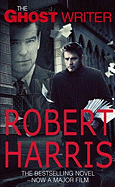
The Ghost Writer

We may never judge a book by its cover because it is nailed into our heads even before we begin to learn the nursery rhymes. But, what happens when you have seen the film based on a book and that too a gripping one? You go to the book expecting to be in line with the film, maybe little clearer and the characters etched with more depth and empathy; that is all. No, not at all! You be ready to be surprised and even shocked as the book takes a totally different trajectory or to another realm.

This was the feeling I'd while reading  The Ghost Writer (the American imprint of The Ghost as published in the UK) by Robert Harris, which is adapted into a film by Roman Polanski.

The story is political thriller where a nameless London based ghost writer (the book is narrated in first person by the writer himself without ever letting out his real name), who is called into to finish the work on the memoirs of the former Prime Minister Adam Lang (a character said be based on Tony Blair), when the man working on them is found dead just a month before the deadline for submitting the manuscript to the publishers. So, the Ghost heads to the USA to be with Adam Lang and his team holed up in Martha's Vineyard in Massachusetts, the summer holiday home of the rich publisher Martin S. Rhinehart to finish the book. Obviously, the sailing isn't smooth as the Ghost had expected. First, the manuscript he has been given to work with is bland and needs overhauling. Second, Lang is very reluctant to open up about is youth and his years in Cambridge, and, there is discrepancy in what Lang says about his entry into politics and the actual version as the Writer finds out through his research. There is more to come in terms of thriller and conspiracy theory.

The film starring Pierce Brosnan as Adam Lang and Ewan McGregor in the title role is loyal to the book as far as the thriller part of the story.

But, what I loved about the book is the fact that at least half of it is a writer's manual, a ghost writer's manual to be precise without the dreaded 'Do it yourself' exercise with the process of writing dealt with in detail; from drawing the Contract to how to present yourself in front of your subject. Everyone of the seventeen chapters begins with a quote from Andrew Crofts' seminal book titled Ghostwriting thereby giving direction about how the story will move in the said chapter.

Couple of interesting passages from the book:

All good books are different but all bad books are exactly the same.

Of all human activities, writing is the one for which it is easiest to find excuses not to begin – the desk's too big, the desk's too small, there is too much noise, there is too much quiet, it's too hot, too cold, too early, too late. I had learned over the years to ignore them all, and simply start.

A book unwritten is a delightful universe of infinite possibilities. Set down one word, however, and immediately it becomes earthbound. Set down one sentence and it's halfway to being just like every other bloody book that's ever been written. But the best must never be allowed to drive out the good. In the absence of genius there is always craftmanship. One can at least try to write something which will arrest the reader's attention – which will encourage them, after reading the first paragraph, to take a look at the second, and then the third.
This in no way means that this book is very high funda or technical; it can be enjoyed by anyone who is interested in listening to a good story.

PS. Searching for this book was an experience in itself. It was last year in Bengaluru; I went into an upmarket book-store and asked for this book. At least half a dozen of sale-people converged around me and virtually emptied the whole of the 'Horror' section on my lap. Ma and my sister-in-law had a hard time explaining to them that I wasn't interested in horror stories but just wanted a novel titled The Ghost written by Robert Harris. In the end, they themselves had to dig it out from somewhere for me.

Friday, December 31, 2010

From a wannabe writer

It is amazing how a few hours can change your thought process. I'd planned to type this post last night (it was churning in my head for a long while now) with the title I would have been mason or carpenter discussing the blurb of a slim book Letters to a Young Poet by Rainer Maria Rilke that goes like:

Go within and scale the depth of your being from which your life springs forth. At its source you will find the answer to the question whether you must write. Accept it, however it sounds to you, without analysing. Perhaps it will become apparent to you that you are indeed called to be a writer. Then accept that fate; bear its burden, and its grandeur, without asking for the reward, which might possibly come from without.

I had planned to write how I would been a mason or a carpenter (who works as diligently as a painter or a writer towards his craft without giving much thought to the world around him) instead of struggling to be a writer, a choice I always think is compelled by my physical limitations. But, a short visit to the hospital yesterday (29th Dec'10) and completing the book in single sitting this evening (30th Dec'10) changed the form of this post.

This book is not merely an advice or encouragement to a young poet from a senior fellow as the title suggests. But, it dwells on the mysteries of life like any good book should; from creativity to love to sex to God, it covers many topics but, its main focus is on solitude, aloneness or loneliness of a creative soul; apathy of the world towards a creative soul to be precise (that is what I could gather). In the modern world I doubt that such experience would be limited to creative people alone, even a corporate honcho, a lawyer or a medical professional would be experiencing such apathy.

Even though I found this whole book to be a big quotable quote. Still there are a couple of nuggets worth sharing:

Things are not as easily understood nor as expressible as people usually would like us to believe. Most happenings are beyond expression; they exist where a word has never intruded. Even more inexpressible are works of art; mysterious entities they are, whose lives, compared to our fleeting ones, endure.

For one human being to love another is perhaps the most difficult task of all, the epitome, the ultimate test. It is that striving for which all other striving is merely preparation.

Wishing you all a happy and fruitful 2011.

Tuesday, July 07, 2009

Trying To Grow

My review of Trying To Grow by Firdaus Kanga has been published (modified) in the Apr-Jun 2009 issue of Success & Ability.

The wish to reread an old book may be same as wishing to meet a distant cousin whom you had only met for a few days in your childhood, and, those days are the most cherished memories of your younger days. Now, you feel scared that he may have changed, may have lived a life totally different from yours, and, may have grown up to be temperamentally exactly opposite of you. Then how will you greet him? Hug, shake hands or just say Hi?

I felt the same kind of trepidation when I took up Firdaus Kanga’s semi-autobiographical novel Trying to Grow (recently relaunched by Penguin in paperback). I had read the (borrowed) hardbound version some twelve-thirteen years ago. Those days I was still in the Sidney Sheldon, Harold Robbins, Jeffery Archer, and Arthur Hailey phase, and, Indian English writing was still in nascent stage (I hadn’t read any except a few books by R. K. Narayanan). So, though I was charmed by Kanga’s writing I wasn’t capable of enjoying it in its full lustre (there was a burden that I was reading something very important that I may not be able to appreciate fully).

Trying to Grow tells the coming-of-age (clichéd Bollywood phrase, but trust me it has lot more going for it) story of a boy born with Osteogenesis imperfecta (Brittle Bone Disease) who would break every bone if exerted slightest pressure till the age of five.

This book can be described as showing what roller coaster ride a disabled person’s life in India can be through eyes of Daryus Kotwal nicknamed Brit (as in Britt Ekland and not punning his medical condition as justified by his ten years old sister Dolly when he was born).

Brit’s story may feel funny and frivolous on the surface from the beginning when Brit as an eight year old is taken to a Miracle Man Wagh (tiger) Baba by his father Sam. The Baba does not wear any clothes and as expected turns out to be a fraud. Even the dialogues amplify such situations, especially between Brit and his sister Dolly are laced with innuendos and baser connotations that we fear that their relationship may be bordering on incest.

It is only when we put our analytical caps on that we realise that this just a ploy by the author to lull the reader into a comfort zone (as a scheming boxer would wait patiently for his opponent to let his guard down to give him the knockout punch) before letting him know the harshness of the world occupied by the disabled.

More than the pathos of the protagonist (we doubt for that matter if there are any going by his jovial outlook) who would not grow more than four foot, the story focuses what the people surrounding him go through. His parents are always doubtful of what to dream or aspire for their ill-fated offspring. They are always in conflict amongst themselves, if one of them feels gung-ho about his prospects the other paints a bleak picture. And, his sibling Dolly is the epitome of unconditional love, she is ready to sacrifice her joy to give happiness to her lame brother.

In short, anyone who has grown up in India in the last few decades with severe disability and normal intelligence will have at least a few anecdotes to point and say this has happened in my life. Perhaps except the sexual encounters that our hero Brit was lucky to have (maybe I’m jealous).

Here are couple of snippets that stayed with me after I finished the book for a second time:

When Brit gets a Surprise Special Prize from the School on their Annual Day where he went write exams after studying sitting at home and coming fifth in the class:

Around me the applause burst and swelled like some orchestral climax while I grew smaller and smaller in my seat wishing I wasn’t there, wishing Father Ferra hadn’t talked about me, wishing I hadn’t got this prize for having legs that didn’t work.

And, here is the recklessness of forgetting ones disability and jumping into insurmountable situation:

Funny, isn’t it? When someone is the way I am, you’d think he’d never forget it. But I do. For hours, days. Till I pass a mirror or am ditched at the library.

And, coming back to meeting a long lost cousin: I was as charmed by Brit Kotwal as I was thirteen years ago and felt like giving him a brotherly hug.
Wednesday, June 10, 2009

My Friend Sancho


Read this book by former journalist and avid blogger Amit Varma. It is an extremely likeable book in spite of some flaws. The first thing you notice is that uses everyday language and is not pretentious as wannabe on the Booker long-list next season.

It tells the story of Abir Ganguly, a 23 years old journalist covering crime for an afternoon tabloid in Mumbai. Abir comes as a happy-go-lucky guy with an acidic sense of humour, which almost lands him in a soup every time he uses it. Later we realise that we are privy to his thoughts as this is first person narrative (giving the reader a schizophrenic feel as the narrator himself maybe feeling).

As for the tale; Abir becomes a hapless witness of Police killing an innocent person by suspecting him to be a gangster, and as fate would have it he become the protector of the victim’s teenaged daughter (doing B Com) for the next few days. To complicate matters further he starts to fall in love with her. Above all, she is a Muslim named Muneeza (nicknamed Sancho). So, what happens when she comes to know that he was an embedded journalist waiting outside her house (with a photographer) for the Police to arrest him and bring him outside, then silently going away knowing that Police has botched up by killing her father?

The story flows smoothly as Abir tries his best to make the most out of the complicated situation. On the one hand, he is supposed to write a sympathetic profile of Muneeza’s slain dad. And, when he is half way through, he is ordered to include a similar piece on the Officer who shot him.

The writing does become heavy in between as Abir philosophises on various issues that he has to tackle, about his love for Muneeza and lot of other things that makes us doubt whether the protagonist is really 23 or he is 32?

Another slight blemish is the promotion of author’s blog by Abir, which makes us doubt if Amit Varma is a fan of Yash Raj Films as they have become the masters of self-reference in recent times.

I’ve no idea if there is any subtext in the use of Sancho in the title as I’m not very familiar with the Spanish classic from which it is derived.

You can find two cohesive reviews of the book here and

Wednesday, April 22, 2009

Borrowed Words

It was but yesterday we met in a dream. 

You have sung to me in my aloneness, and I of your longings have built a tower in the sky. 

But now our sleep has fled and our dream is over, and it is no longer dawn. 
The noontide is upon us and our half waking has turned to fuller day, and we must part. 

If in the twilight of memory we should meet once more, we shall speak again together and you shall sing to me a deeper song. 

And if our hands should meet in another dream, we shall build another tower in the sky. 


And, as it has become customary in this blog for the last few posts; another Ghazal by Jagjit Singh from the album Love Is Blind:


Lyrics:
samajhate the magar phir bhii na rakkhii duuriyaa.N hamane 
charaaGo.n ko jalaane me.n jalaa lii u.Ngaliyaa.N hamane
ko-ii titalii hamaare paas aatii bhii to kyaa aatii 
sajaaye a.ng bhar kaaGaz ke phuul-pattiyaa.N hamane
yuu.N hii ghuT ghuT ke mar jaanaa hame.n ma.nzuur thaa lekin 
kisii kam-baKht par zaahir na kii majabuuriyaa.N hamane
ham us mahafil me.n bas ek baar sach bolane vaalii 
zubaa.N par umr bhar mahasuus kii chi.ngaariyaa.N hamane
Lyrics are taken from here

Loose translation:
I understood. But never kept a distance/
Burnt my fingers trying to light a few lamps.

How could any butterfly flutter around me?
I always decorated the place with paper flowers.

I was ready to die feeling suffocated/
But never displayed my limitations to a heartless person.

Uttered the truth only once in that gathering/
And, felt embers on my tongue for a lifetime.

(I hum this Ghazal after every reckless adventure I take without discounting my limitations and then fail miserably. I promise to insulate myself emotionally after every fall. But, having the nature of a dog’s tail, which never straightens whatever you do. I never learn). 

This is the 49th post on this blog. I’ve never took blogging seriously. So, no celebrations on reaching half century or anything. But, it has been a heck of an experience (“life-changing” wouldn’t be an exaggeration). First of all, I found the courage to expose my disability. I wouldn’t have done that if I’d continued writing in print media alone (in fact, the Feature Editors of the newspapers I wrote for realised the severity of my physical condition only after accepting and agreeing to publish my first submissions). There are a few people who probe if I’ve a dent in my personality. But, that is a small issue. Above all, blogging has won me a few good friends, who enrich my life on a daily basis. Thank you chums.

Thursday, March 26, 2009

Intensity and a bit of Pamuk

I first heard Apne honton par sajana a few years ago (they were my pre-computer days. So, it must be roughly eight-nine years). I was charmed by the intensity of its lyrics by Qateel Shifai. Jagjit Singh’s voice worked its own magic (being one of my all time favourites). Scouted for the album for months before spotting it in a cassette shop in Ernakulam.

apane hoTho.n par sajaanaa chaahataa huu.N 
aa tujhe mai.n gunagunaanaa chaahataa huu.N 
koii aa.Nsuu tere daaman par giraakar 
buu.Nd ko motii banaanaa chaahataa huu.N 
thak gayaa mai.n karate-karate yaad tujhako 
ab tujhe mai.n yaad aanaa chaahataa huu.N 
chhaa rahaa hai saarii bastii me.n a.Ndheraa 
raushanii ho ghar jalaanaa chaahataa huu.N 
aaKharii hichakii tere zaano.n pe aaye 
maut bhi mai.n shaayaraanaa chaahataa huu.N 

Loose translation:

I wish to decorate on my lips/come I wish to hum you.

By dropping a few tears on your shawl/wish to convert droplets into pearls

I’m tired of remembering you/now I wish to be remembered by you.

The whole locality is engulfed in darkness/wish to burn my home to brighten it up.

My last hiccup should come on your lap/wish my death also to be poetic.

PS: the 3rd stanza is missing in the video. The fourth one is my favorite.                                                                                                       


Now a beautiful passage from Istanbul: Memories of a City by Orhan Pamuk:

At least once in a lifetime, self-reflection leads us to examine the circumstances of our birth. Why were we born in this particular corner of the world, on this particular date? These families into which we were born, these countries and cities to which the lottery of life has assigned us – they expect love from us, and in the end, we do love them, from the bottom of our hearts – but did we perhaps deserve better? I sometimes think myself unlucky to have been born in an ageing and impoverished city buried under the ashes of a ruined empire. But a voice inside me always insists this was really a piece of luck. If it were a matter of wealth, then I could certainly count myself fortunate to have been born into an affluent family at a time when the city was at its lowest ebb (though some have ably argued the contrary). Mostly I am disinclined to complain: I’ve accepted the city into which I was born in the same way I’ve accepted my body (much as I would have preferred to be more handsome and better built) and my gender (even though I still ask myself, naively, whether I might have been better off had I been born a woman). This is my fate, and there is no sense arguing with it. This book is about fate…. 

There are two reasons for this post:

1. To push the embarrassing previous post to the second place.
2. To fight the superstition that I can’t finish reading a book if I copy a quote or passage before completely reading it.

Thursday, October 02, 2008

Sparks in a Book

There was not one amongst us who looked forward to being born. We disliked the rigours of existence, the unfulfilled longings, the enshrined injustices of the world, the labyrinths of love, the ignorance of parents, the fact of dying, and the amazing indifference of the Living in the midst of the simple beauties of the universe. We feared the heartlessness of human beings, all of whom are born blind, few of whom ever learn to see.

The Famished Road by Ben Okri.

A Spiritual Guru may take reams of paper or hours of discourse to say something so profound, which a fiction writer has done so simply. Here is another beautiful example:

“D’you know what happens when you hurt people?” Ammu said. “When you hurt people, they begin to love you less. That’s what careless words do. They make people love you a little less.”

The God of Small Things by Arundhati Roy.

These kinds of sparks do elevate our spirits. And, they also spur us to dust up the characters idling in our heads and to weave stories around them.

I’ve no illusions that anything I put on the paper will be worth seeing the light of a printing press at least for the next twenty years. By then I hope to acquire some decent skills of being a fiction writer.

But one needs to spell out such grand missions when life seems to be stuck in a black hole.

Thursday, August 14, 2008

Playing God?

Long back I wrote a post wondering what difference it would have made to people around me if pre-natal detection of cerebral palsy was possible in the initial stages of pregnancy as it is for Down’s syndrome. I haven’t got a clear cut idea of what I feel about the matter or to put it plainly I’m confused. Some days I feel I’d be the first in line with application if ever euthanasia is legalised in our country.

(I know that the glass-half-full theorists among you are itching to pounce on me for thinking about euthanasia. Don’t worry; I’m the same old jovial person if you talk to me. I still get excited if I see a poster of a new film on the road. I still wish to see the next release. It is just that I feel ‘Survival of the fittest’ is the most correct statement and I’m not fit enough to survive).

If you’re wondering why I suddenly dug out an old post; the circus on news channels regarding an abortion plea in the Mumbai High Court as the foetus was supposed to have congenital heart ailment.

The hospital given the charge of assessing the medical condition made a clerical error and another offered free medical care. I don’t know, but all this feels like a joke to me. I’m not being judgemental here about the action that Mehtas took or being a pro-life advocate. Still it gives me a ticklish feeling somewhere. You’re talking about a life and you say ‘a clerical error’. On the other hand, if the child grows up to be ok and finds all the media clippings what kind of emotions he/she will go through or what kind of equation he/she will have with the parents? At least the identity of the couple could have been kept a secret.

Wonder what the parents of Naga Naresh Karuturi would have done if they’d premonition of what their child will go through in his life.

There will more such instances as we make progress in science. But, I believe that Nature will have its own way of getting even with us.

There is a beautiful passage in Jurrasic Park by Michael Crichton about how we tend misuse scientific power:

"You know what's wrong with scientific power?" Malcolm said. "It's a form of inherited wealth. And you know what assholes congenitally rich people are. It never fails."

Hammond said, "What is he talking about?"

Harding made a sign, indicating delirium. Malcolm cocked his eye.

"I will tell you what I am talking about," he said. "Most kinds of power require a substantial sacrifice by whoever wants the power. There is an apprenticeship, a discipline lasting many years. Whatever kind of power you want. President of the company. Black belt in karate. Spiritual guru. Whatever it is you seek, you have to put in the time, the practice, the effort. You must give up a lot to get it. It has to be very important to you. And once you have attained it, it is your power. It can't be given away: it resides in you. It is literally the result of your discipline.

"Now, what is interesting about this process is that, by the time someone has acquired the ability to kill with his bare hands, he has also matured to the point where he won't use it unwisely. So that kind of power has a built-in control. The discipline of getting the power changes you so that you won't abuse it.

"But scientific power is like inherited wealth: attained without discipline. You read what others have done, and you take the next step. You can do it very young. You can make progress very fast. There is no discipline lasting many decades. There is no mastery: old scientists are ignored. There is no humility before nature. There is only a get-rich-quick, make-a-name-for-yourself-fast philosophy. Cheat, lie, falsify-it doesn't matter. Not to you, or to your colleagues. No one will criticize you. No one has any standards. They are all trying to do the same thing: to do something big, and do it fast.

"And because you can stand on the shoulders of giants, you can accomplish something quickly. You don't even know exactly what you have done, but already you have reported it, patented it, and sold it. And the buyer will have even less discipline than you. The buyer simply purchases the power, like any commodity. The buyer doesn't even conceive that any discipline might be necessary."

Hammond said, "Do you know what he is talking about?"

Ellie nodded.

"I haven't a clue," Hammond said.

"I'll make it simple," Malcolm said. "A karate master does not kill people with his bare hands. He does not lose his temper and kill his wife. The person who kills is the person who has no discipline, no restraint, and who has purchased his power in the form of a Saturday night special. And that is the kind of power that science fosters, and permits. And that is why you think that to build a place like this is simple."

Sunday, October 21, 2007

On Chesil Beach


For the past few months I’ve been reading books back to back as a result of a pep talk from a writer I respect a lot. Earlier I’d have read just one or one and half books per year, and many more lying bookmarked at various stages of completion.

On Chesil Beach by Ian McEwan is the latest one that I read. This book marks a couple of firsts for me. This is the first proper book that I completed in one sitting (a toilet break and a tea break not counted). This is also the first short listed book for the Booker Prize that I read before the Prize was announced.

On Chesil Beach tells the story of a virgin couple, who have been lovers for some time now. It is set in the 60s when people did not talk about sex or discuss their anxieties with their partners openly. They have come for honeymoon in a resort on the Chesil Beach and it becomes a disaster. The author weaves their tale of one night with layers that lay out the past of the protagonists and discusses the politics of that period in England (went beyond my head).

Somehow, On Chesil Beach took me back to Vikram Seth’s An Equal Music maybe because the leading ladies of both the books are musicians. And, the review of Just Married by Baradwaj Rangan kept reverberating in my head.

Here is the first chapter of book from the New Yorker.

Reviews of the book as appeared in the Guardian and the New York Times (requires free registration).

Thursday, February 15, 2007

The Diving-Bell And The Butterfly


I felt embarrassed, ashamed and humiliated when I made my mother read one of my recent posts on this blog a couple of days back; embarrassed not because I had written something that she wasn’t meant to read, but because I found some glaring flaws in the post as she was reading it aloud. Some misplaced/missing words, some grammatical errors that made think of the people who must have read that post and chuckled (I mail my new posts to at least two dozen people), but were kind enough to reply with comments similar to “well-written” and some even posted comments on the blog. It took me a couple of hours to correct the post, but took me the whole night to get over the shame; making me think of excuses for such a lapse; my mind working faster than the two fingers of my right hand or maybe I should’ve read it aloud before posting it and many such things. The worse I feared was that I won’t be able to get back to blogging for a few months until this event remained fresh in my mind.

But as you can see that it was not to happen and I am back here writing. Things changed when I got a courier with a book titled The Diving-Bell And The Butterfly by Jean Dominique Bauby yesterday.

I was explaining the speciality of the book to my father; “it is the autobiography of the French editor of Elle, who dictated it just by batting his left eyelid after suffering a paralytic stroke”, and here I’m sulking about my two stiff fingers of my right hand that won’t move at the speed of my thoughts.

The book is a remarkable memoir of the author’s life in hospital after he suffered the stroke or locked-in syndrome. It is anecdotal and describes how he feels being in the cocoon of his body. It isn’t all that gloomy as I make it sound; there are a few really hilarious passages where he talks about hospital staff, some rude, some indifferent and some being a nuisance.

Somewhere before the end of the book Bauby tells us that he wishes to write a play where the hero suffers from locked-in syndrome and goes through all that he has experienced, in the climax he gets up from his bed and exclaims something like; “Shit! It was just a dream”.

A slim book (133 pages) with large fonts, this is the first book that I could finish in matter of hours.

If you are interested in knowing where I got to know about this book, just read the first comment on this post by Jai Arjun Singh

A detailed review of the book from The New York Times. (Free registration required).

And, thank you HCP for getting the book for me.

Saturday, January 13, 2007

Black Friday

I had sourced Black Friday: The True Story of the Bombay Bomb Blasts by S Hussain Zaidi, the crime reporter of Midday from Mumbai when Abu Salem’s extradition from Portugal was hot news and media was busy drawing up his biography. I thought this book would give me insight into this man, but my brother-in-law who had read the book before me, as he had bought it for me said that there is hardly any mention of Salem, this book is about how Tiger Memon orchestrated the blasts. So, it went into my “will read someday” stock.

I was also aware that Anurag Kashyap had made a film based on it. So, the book never left my consciousness. When the convictions in the Blast Cases began and news of film’s imminent release started floating, the urgency to read it returned. Ma had to dust up my stock to find this book.

I did not know what to expect, I just started reading and to my surprise this was one of fastest read I had (though it took nearly fifteen days, so you know how quick I read :p). Black Friday is engrossing to say the least; it starts with prologue that describes what happened to common people at various locations in the city where blast happened on March 12, 1993. Then it moves on to build up the events and preparations that happened before the blasts. The blasts take place followed by investigation, nabbing of few of the culprits and the beginning of the trail. Culminating with an epilogue that shows the suffering and the loss of common folks from diverse social strata who were on the roads on that day.

Personally for me the blast of 1993 were distant (those were the pre-news-channels days). But the 7/11 local train blasts gave me the taste of terror. Having at least dozen people I know travelling by those trains at that time of the day made me really panicky. Frantic calls and SMSing started enquiring about the well-being of relatives, friends and acquaintances, which continued for a few days. It made me wonder about the foot soldiers who may have placed the explosives on the trains for a few thousand rupees; what they may be feeling if they were watching the devastation they had caused on TV, or if one of their relatives or friends happened to be the victim of these blasts.

Black Friday brought the same upsetting questions to my mind.

P.S. The film is expected to be in the theatres on February 9th.

P.P.S. Here is an early review of the film.